
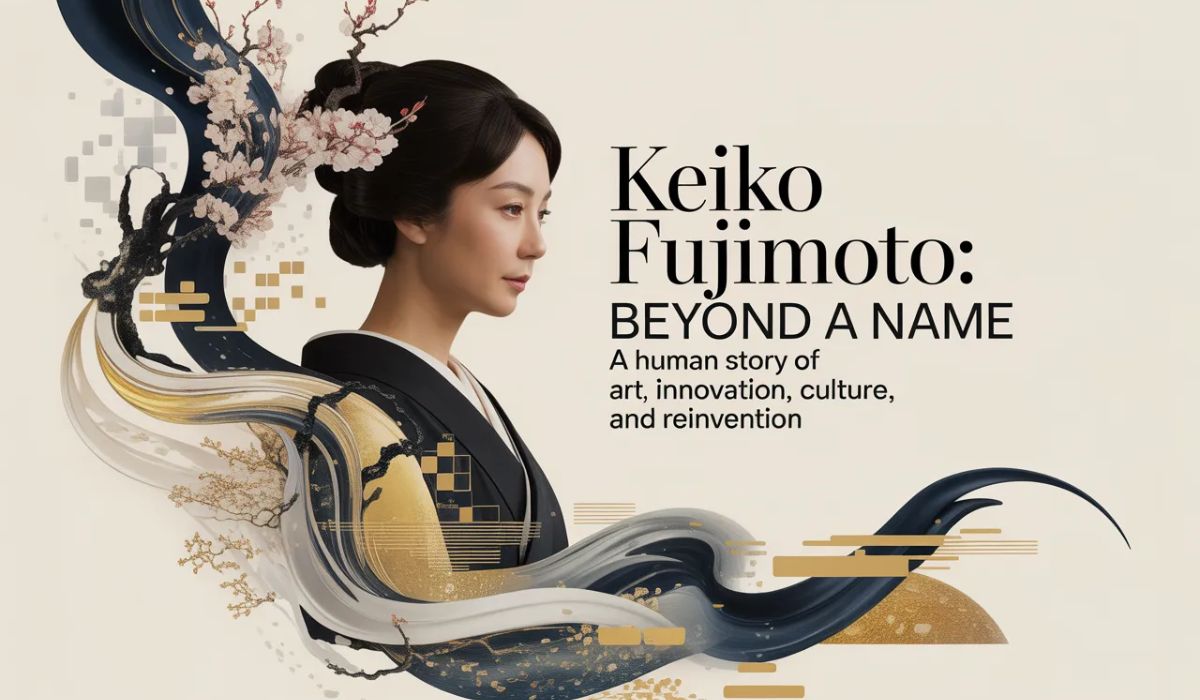
When you hear the name Keiko Fujimoto, what comes to mind? A public figure? A tech professional? The ex‑wife of someone famous? Many of us learn about people first through associations, headlines, or surprise facts. But behind every name — especially one that pops up in public conversations — there’s a life full of choices, challenges, and quieter achievements.
In this article, we’ll walk through the life of Keiko Fujimoto with depth, balance, and clarity. You’ll learn who she is, what she’s known for, and how her personal and professional paths unfolded. This is not a dry biography — it’s a look at a real person navigating real life.
1. Who Is Keiko Fujimoto? A Simple Introduction
Keiko Fujimoto is a Japanese‑born artist, technical communications professional, actress, and television personality who has lived and worked in the United States and Japan. She became known in public conversation largely because of her marriage to Ramesh “Sunny” Balwani, the former president and COO of the health‑tech company Theranos. But her story extends far beyond who she was married to.
At heart, Keiko is someone who bridges cultures — drawing from Japanese heritage, studying and building a life in the United States, and engaging creatively and professionally in multiple fields.
2. Early Life: Roots in Japan and a Global Outlook
Keiko Fujimoto was born in Tokyo, Japan, on June 23, 1977. Growing up in Japan likely immersed her in a culture that blends tradition and modernity — where arts, attention to detail, and a sense of harmony are part of daily life.
Her early years planted seeds that would guide her later interests in art, design, language, and cross‑cultural communication.
Imagine a garden where two different plants — tradition and innovation — grow side by side. That image fits Keiko’s upbringing: rooted in Japanese culture, but with the potential to flourish in broad, international directions.
3. Education: Building a Foundation for Communication and Creativity
Keiko didn’t just rely on talent — she fortified it with education. After finishing school in Japan, she pursued further education both at Tsuda University in Japan and later in the United States at the University of Illinois Urbana‑Champaign, where she studied Information Sciences.
These fields — international studies and information science — may sound different at first, but together they tell an important part of Keiko’s story:
- One focuses on understanding people and cultures
- The other on organizing and sharing information clearly and meaningfully
Put together, this combination gave her a rare toolkit: grounding in human‑centered perspective and the technical skills to communicate complex ideas.
4. Career Beginnings: From Media to Meaning
After college, Keiko’s professional life took shape in two overlapping arenas:
Creative Engagements
She appeared on Japanese television, including shows like Takajin Mune Ippai, which helped introduce her to broader audiences. These early appearances were not blockbuster performances, but they did show her comfort with public communication and creative expression.
Technical and Professional Growth
More quietly but significantly, Keiko built a strong career in the semiconductor industry, a field that impacts the technology we use every day. She joined Applied Materials, Inc., a global leader in semiconductor manufacturing equipment, as a technical writer — someone who turns complex engineering information into materials that engineers, customers, and technicians can actually understand.
If you’ve ever opened a manual or user guide and thought: Wow — this makes sense, you’ve experienced what people like Keiko helped create.
5. A Climb in Tech: Managing Communication for a Complex World
Writing about semiconductors might not sound thrilling at first. But in reality, it’s like being the translator between two worlds: the language of engineers and the practical needs of the people who use tech every day.
In technical publications, every word matters. A misplaced sentence could cause misunderstandings, delays, or safety issues. Keiko rose from a senior technical writer to a managerial role, overseeing teams and ensuring documentation quality across projects.
This shows not just technical skill, but leadership — the ability to organize, mentor, and guide others.
6. Art and Design: A Creative Thread Woven Through Her Life
Outside the technical world, Keiko has pursued art and design, creating visual work that reflects her personal sensibilities. Her pieces have been shown in galleries such as SOMA Artist Studios in San Francisco, a space known for celebrating local and emerging artists.
Think of this as the creative side of her mind — not separate from her professional work, but in conversation with it. Good design and good communication share common principles: clarity, intention, and connection.
Whether art is made on a screen or through words on a page, both require a sensitivity to how people perceive and interpret. Keiko’s art reflects this sensitivity.
7. Marriage and Public Recognition: The Theranos Connection
It’s impossible to talk about Keiko Fujimoto without mentioning her marriage to Ramesh “Sunny” Balwani, who later became widely known for his role at Theranos — a health‑tech company that collapsed amid fraud charges.
They divorced in 2002, years before the scandal around Theranos took center stage in the media. Yet, because public interest often fixes on dramatic stories, her name frequently appears in connection with his — even though her own life and career were already in motion.
Here’s an important point: often in life, we’re introduced to people through moments of drama or controversy. But that lens is narrow. It’s like seeing a whole tree through just one leaf — the real picture is far richer.
Keiko’s marriage was part of her story, but it doesn’t define her entire life.
8. Life After Divorce: Choosing Privacy and Purpose
After her divorce and the subsequent public attention around Theranos, Keiko chose a low‑profile life — focusing on her work, creativity, and personal journey rather than media attention. Reports suggest she eventually returned to Japan, stepping back from the spotlight.
That kind of choice speaks to a bigger truth: fame and notoriety are not the same as fulfillment. Some people chase the flash of public attention, while others — like Keiko — build quietly, steadily, and on their own terms.
It’s like a mountain stream that flows under trees and rocks — not always seen by those watching from afar, but vital and steady in its own course.
9. Lessons in Resilience and Reinvention
What can we learn from Keiko’s journey?
- Focus on craft before fame — Keiko’s decades in technical communication show dedication to substance over spotlight.
- Balance creativity and logic — blending artistic instincts with structured thinking is rare and valuable.
- Privacy can be a choice, not a consequence — she chose a quieter life even when headlines beckoned.
- Your worth isn’t someone else’s story — association with a public figure doesn’t replace your individual achievements.
Her narrative reminds us that behind every public name is a real person with layers, ambitions, setbacks, and private victories.
10. The Legacy Beyond Headlines
Today, Keiko Fujimoto may not be a household name like a movie star or tech founder. But her story matters because it reflects everyday resilience — the work of building skills, sustaining a career, exploring creativity, and making personal choices with intention.
Her legacy isn’t a single viral moment. It’s the sum of steady progress, intellectual curiosity, cultural adaptability, and a deeply human approach to life.
Conclusion: Who Is Keiko Fujimoto, Really?
If someone asks you: “Who is Keiko Fujimoto?” — now you have a layered answer.
She is:
- A creative mind who brings an artist’s eye to life
- A skilled communicator who translated complex ideas into usable knowledge
- Someone who navigated multiple cultures with grace
- An individual who chose quiet integrity in a world that often rewards loudness
Her story isn’t about fame. It’s about depth.
And in a world full of noise, depth is something worth paying attention to.
Frequently Asked Questions (FAQs)
- Who is Keiko Fujimoto?
Keiko Fujimoto is a Japanese‑born artist, technical communications expert, and television personality who built a long professional career and appeared on media platforms, beyond just being associated with high‑profile individuals. - What is Keiko Fujimoto known for?
She’s known for her work in technical publications, her creativity in art and design, and public recognition due to her marriage to Ramesh “Sunny” Balwani, though her professional achievements stand independently. - Did Keiko Fujimoto work in technology?
Yes — she worked for decades in technical documentation and communication, helping to explain complex semiconductor technology to engineers and customers. - Is Keiko Fujimoto an artist?
Yes — she has pursued visual arts, and her work has been shown in galleries, reflecting her creative expression and personal voice. - Where does Keiko Fujimoto live now?
Reports indicate that after years in the U.S., she chose a quieter life and returned to Japan, where she continues her artistic and personal pursuits.